
Why Your Home Feels Cold Even When the Heater is On…How Better Design and Construction Changes Everything
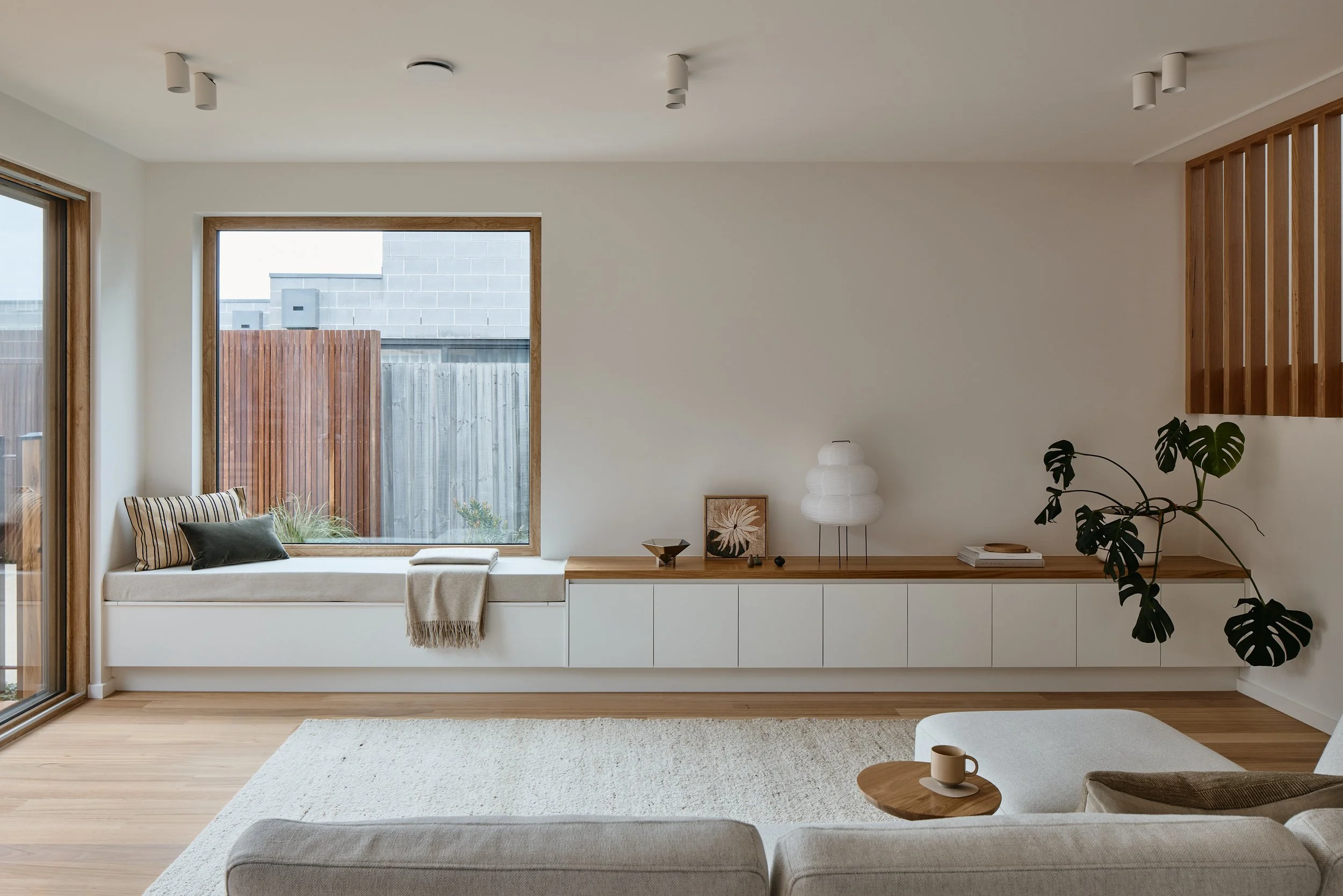
You can have the heater running all day, but if your home isn’t built to retain heat, it will still feel cold.
Across Geelong, the Surf Coast and the Bellarine Peninsula, we often hear the same frustration: “We just can’t get the house warm.” In many cases, this comes down to the performance of the home itself rather than the heating system.
The difference between a home that feels consistently warm and one that doesn’t lie in how it’s designed and built from the ground up.
It’s Not About More Heating, It’s About Less Heat Loss
In a high performance home, comfort is achieved by retaining heat, not constantly replacing it.
In many homes not built to modern performance standards, heat is constantly escaping through:
Gaps and air leakage
Poor insulation or inconsistent coverage
Inefficient glazing
Thermal bridging in the structure
This means the heating system is working continuously just to maintain a baseline temperature.
A well-designed home flips this equation, reducing heat loss so the warmth you generate actually stays inside.
Airtightness: The Foundation of Winter Comfort
One of the biggest differences between standard construction and a high performance home is airtightness.
In many existing homes, uncontrolled air movement allows cold air in and warm air out. This creates draughts, temperature swings, and that persistent “never quite warm” feeling.
As a custom builder, we focus on a carefully detailed building envelope that significantly reduces air leakage, resulting in:
More stable indoor temperatures
Reduced heating demand
Greater overall comfort
Insulation That Performs as a System
Insulation only works effectively when it is continuous and correctly installed.
In lower-performing homes, insulation is often:
Incomplete or poorly fitted
Interrupted by gaps and services
Reduced in effectiveness by thermal bridging
In contrast, high performance construction treats insulation as a complete system, working together with the structure to retain heat evenly throughout the home.
High-Performance Windows and Glazing
Windows are one of the most significant sources of heat loss in any home.
In many conventional builds, standard glazing allows warmth to escape quickly, creating cold zones near windows and reducing overall comfort.
In a high performance home, glazing is carefully selected and integrated into the full building system to:
Minimise heat transfer
Reduce draughts
Improve thermal stability
It’s not just about the glass, it’s also about the frame, particularly whether it is thermally broken, which plays a critical role in overall performance.
Designed for the Way You Live
A home that feels warm in winter isn’t just about materials; it’s about intelligent design.
We consider:
Orientation to capture winter sun
Layout that supports natural heat distribution
Zoning to retain warmth where it’s needed most
Thermal mass that works in harmony with insulation
Good design reduces reliance on mechanical heating before it’s even switched on.
Thermal Mass Can Work Against You (If Not Designed Properly)
Materials like concrete and tile absorb heat slowly.
In a well-designed home, this is beneficial. But without proper insulation beneath or around the slab, that same thermal mass can draw warmth away from the living space, making floors feel cold and rooms harder to heat.
This is particularly relevant in modern homes across Geelong and the Bellarine, where polished concrete is a popular design feature.
Heating Systems Aren’t Always the Problem
Often, the heating system itself is performing as expected, but:
It’s undersized for the space
It’s heating rooms that aren’t sealed
It’s running without zoning or airflow control
This creates the impression of inefficiency when the real issue is heat retention, not heat generation.
Lack of Passive Design Principles
Homes not designed with orientation and solar gain in mind often rely heavily on mechanical heating.
Without north-facing living areas or controlled shading:
Winter sun is underutilised
Heat gain is minimal
Heating systems carry the full load
Good passive design reduces the need for artificial heating and improves comfort naturally.
Final Thoughts
If your home feels cold even when the heater is running, it’s rarely a single issue, it’s a combination of heat loss, airflow, insulation performance, and overall design.
For homeowners across Geelong, the Surf Coast and the Bellarine Peninsula, this is where the difference between conventional construction and a high performance home becomes clear.
As a custom builder and Certified Passivhaus builder, we integrate airtight construction methods, continuous insulation strategies, and careful detailing throughout the design and build process to improve thermal performance and reduce condensation risks. The result is a home that maintains stable, comfortable temperatures year-round, without relying heavily on mechanical heating.
While a volume-built home may appear more cost-effective upfront, the long-term savings in energy efficiency, comfort, and durability offered by a custom high performance home far outweigh the initial investment.
Because true comfort doesn’t come from working your heater harder, it comes from building a home that holds its warmth in the first place.